
Saturday, 30 September 2023

Friday, 29 September 2023
Thursday, 28 September 2023
How to Go from Overwhelmed to Productive

Ursula Jorch
Overwhelm can really slow you down in your business. Here are 3 strategies to help guide you out of overwhelm territory.
When you’re in the middle of overwhelm territory in your business,
 it’s hard to find the map or GPS to find your way out. Here are 3 strategies to guide you:
1. Ask yourself: Is my overwhelm a stand-in for something else?
Overwhelm can mask other things, like fear. Are you starting something new? Do you have a big undertaking and you don’t know what’s next? That fear of the unknown can pop up when you least want to see it.
Knowing that fear is going to rise up, find ways to calm it down. I talk to it directly, like it’s a person, something separate from me. I call it Stella, my lizard brain, the part of me that fears new things. I comfort her, by metaphorically sitting her on my lap and saying soothing things. After a while, Stella calms down and starts sipping umbrella drinks poolside in her shades.
You might want to keep this conversation to yourself. I recommend not doing it in public, so you’re not drawing stares, though you could pretend to talk into your phone!
If you think it’s fear, but you’re not sure what you’re afraid of, be curious. Ask it questions. Listen for what comes up in your mind as you do. Then face whatever the fear turns out to be. Name it. Is the thing you fear really true? Or likely to happen? Bring your thinking mind in to help you address your fear, and you’ll see it diminish.
Once you know that fear is in the back seat where it belongs, you can get back to driving.
2. Change your perspective.
Play the ‘what if’ game. What if I don’t get all this done? A sense of obligation and repercussions can pile up when you’re busy, so playing ‘what if’ helps you get back to reality.
Make a list of the things that have serious repercussions, and make those your first priority. Breathe first. Take a deep breath. Hold it. OK, you can exhale now. Then begin. As you whittle away at that much shorter list, you’ll see your overwhelm decline.
3. Step awaaaaay from the overwhelm.
When you really can’t find your way out of overwhelm with these strategies, the best thing to do is to step away and get a new perspective. To help you do that,
I asked my clients and followers for ideas, and added a few of my own. I’m sure you’ll find something in this list that will give you that boost you need to regain your equilibrium:
- Play with my cat, Take a walk
- Dance
- Watch a renovation show
- Watch Love Boat reruns
- Still my thoughts
- Change the scenery
- Play with my dog
- A walk in nature
- Retreat to my hammock
- Read
- Organize things
- HGTV
- Snuggle up in my comfy chair and nap
- Disconnect from technology
- Fishing
- Walk the dog
- Float on the river
- Remind myself that this will pass
- Kayak
- Meditate
- Photograph beauty and color
- Pilates
- Sit on my deck
- Take in the mountain views
- Take in the beach views
- Take in the…well, you get the idea
- Gardening to remind me that there are other lives, rhythms, and needs beyond my own concerns
Overwhelm is not a good feeling, and it can slow you down. Check in with yourself to see if something else is behind it, and if you need a new perspective, play ‘what if’ or pick one item from the list or one of your own to recalibrate.
Last thing: a bonus strategy.
Focus on what’s most important, and nothing else. When you see you’re accomplishing a lot, your sense of overwhelm will calm down. Plus, you’ll get important things done! And that’s always an energizing motivator.
Source: Free Guest Posting Articles from ArticlesFactory.com
Wednesday, 27 September 2023
Health Benefits of Mindfulness - New Focus
 Swapan Kumar
The importance of mindfulness in the 21st century can’t be overstated, especially when it comes to increasing quality of life and physical health. Today, mindfulness has become an integral part of all modern workplaces. It’s even one of the more popular “try and get a job” exercise in our current economy, with Facebook CEO Mark Zuckerberg and founder of billion-dollar multi-billion dollar company, Elon Musk, being just two of the many chief executives who have made mindfulness a part of their practice.
But just how are mindfulness practices supported by science?
Benefits of Mindfulness
While research on mindfulness is vast and rigorous and continues to evolve, there are many theories and stories behind the benefits of daily mindfulness practice. Yet, there is one specific factor that appears to be the most deeply rooted.
According to some researchers, mindfulness practices support your ability to receive information from others. It should be noted that mindfulness instruction focuses on avoiding unhealthy thinking, the kind that is led by impulse and is fuelled by difficulty with self-regulating.
There are several treatments for anxiety in the past that have been cited for addressing this.
The particular treatment, called Cognitive Behavioural Therapy (CBT), was developed by psychiatrists Albert Ellis and Erich Fromm, a group of therapists who studied guided imagery, meditation, and the ability to regulate emotions.
A major benefit of CBT seems to be that it replicates the ability to accept different thoughts and feelings.
First Steps in Mindfulness
Although there is no one-size-fits-all approach to mindfulness, the different modalities based on established research all offer a number of benefits.
Meditation: A combination of deep concentration and a focus on sensations, sounds, sights, and relationships can be used to boost the capacity for attention and focus. Research suggests a combination of practice and daily meditation is key to optimal results. Certain modalities, like Kundalini Yoga, use inhales and exhales as specific points of focus and include “zen techniques” to improve attention and focus. Yoga Focused Practice: A meditation with a different focus than the “observation, concentration, and stress reduction” of CBT. The specific focus for “Yoga Focused Practice” can be accessed through the practice of a foundation sequence and guided imagery.
The emphasis is on self-awareness and opening to engaging in unlimited awareness within and outside of the body. Through Yoga Yoga Practitioner Training: An important component of mental and physical health is building the ability to practice without limitation. A model of “mindfulness practice and Yoga Focused Practice” is described to help first-time practitioners develop the skillset and practice.
This model builds the ability to practice both tasks at the same time. Since yoga has also been touted as a key to promoting an active, engaged mind, more formal training in yoga may be recommended for beginners.
Therapies: The focus is on finding and developing an individualised program for self-developing tools and strategies to sustain practices that support improving self-awareness and relationship with others. Therapies are available either individually or in conjunction with life coaching or coaching groups.
Learning to Cultivate Upward Bound: The concept is that mindfulness can lead you to you where you want to go. What may seem like a crazy goal at first may seem achievable and maybe easier than the original thought. It’s not about finding time for meditation, it’s about finding space within yourself to take on new tasks and interests in every area of your life. Ironically, cultivating new behaviours is part of the formative period of growth as a person. Short-term
Stress Management: Each practice can also have a positive impact on your stress level. Practice can promote greater attention, focus, and the ability to take in and value information.
Potential and/or current stressors may be eased by helping you with managing negative emotions.
For more insight into meditation, try the in-depth research by David Spiegel (2001). And, if you want to learn more about the science of mindfulness and the benefits it may offer you, take a look at the article on its medical benefits, “What You Should Know About Mindfulness.”
Source: Free Guest Posting Articles from ArticlesFactory.com
Monday, 25 September 2023
Empowering Beliefs to Live By | Tony Robbins
If you’re looking to improve your life, the first step is to start by destroying your negative beliefs. Objectively examine how you feel about different areas of your life. Where do you stand financially? How’s your professional growth? What’s the state of your personal relationships? If you find that you have negative thoughts about these subjects, it’s time for a change.
Negative beliefs are often limiting and untrue. If you continually tell yourself you’re not smart or experienced enough to get a promotion, you won’t. Only when you reframe this thought into a more empowering belief will you be able to make true progress.
You can start working on this by questioning what’s real, and what’s a limiting belief. Why do you think you’re not experienced enough for a promotion, despite having the correct qualifications? Are there facts to support this, or is this coming from a place of fear and insecurity?
Once you’re able to replace your negative beliefs with empowering thoughts, only then can you make progress and find fulfillment in life.
Visit Tony Robbins' websites:
https://www.tonyrobbins.com/
http://www.unshakeable.com/
Follow Tony Robbins @:
Facebook: https://www.facebook.com/TonyRobbins
Twitter: https://twitter.com/tonyrobbins
LinkedIn: https://www.linkedin.com/in/ajrobbins
Google+: https://plus.google.com/+TonyRobbins
Instagram: https://instagram.com/tonyrobbins/
Tony Robbins is a #1 New York Times best-selling author, entrepreneur, and philanthropist. For more than 37 years, millions of people have enjoyed the warmth, humor and dynamic presentation of Mr. Robbins' corporate and personal development events. As the nation's #1 life and business strategist, he¹s called upon to consult and coach some of the world¹s finest athletes, entertainers, Fortune 500 CEOs, and even presidents of nations.
Wednesday, 20 September 2023
Tuesday, 19 September 2023
Explore the Exclusive Path to Best Self-Confidence Today
Welcome to a journey towards a more confident you. In this beginner's guide, we will explore an exclusive path to building the best self-confidence you've ever experienced. Whether you've grappled with insecurity, self-doubt, or a negative self-image, this guide will provide you with practical strategies to overcome these obstacles. Embrace the calm and confidence that lies ahead.
Before embarking on your journey to increased self-confidence, it's vital to understand the concept of self-esteem. Let's delve into the core of self-esteem and its role in boosting confidence.
Insecurity can be a formidable barrier to self-confidence. Explore effective techniques to conquer insecurity and foster a more positive self-image.

A lack of self-worth can erode confidence over time. Learn how to build a solid foundation of self-worth, allowing your confidence to flourish.
Social situations can be particularly challenging for those with low self-confidence. Dive into strategies to master confidence in social settings, combat shyness, overcome the fear of failure, and manage social anxiety.
Impostor syndrome often plagues even the most accomplished individuals. Discover how to defeat impostor syndrome and acknowledge your achievements with unwavering confidence.
In this calming beginner's guide, we've explored an exclusive path to boost self-confidence. By understanding and addressing keywords like self-esteem, insecurity, self-doubt, self-worth, lack of belief, negative self-image, shyness, fear of failure, impostor syndrome, and social anxiety, you can unlock a newfound sense of self-assuredness. Remember, confidence is a journey, not a destination. Embrace this journey, and you'll find that the path to the best self-confidence you've ever experienced unfolds before you.
Sunday, 17 September 2023
Unlocking Clarity: A Beginner's Guide to Finding Direction in Life
In a world filled with uncertainty and confusion, finding clarity can be akin to discovering a hidden treasure. Many of us have experienced periods of feeling directionless, adrift in a sea of ambiguity, and plagued by frustration and indecision. Fear not, for this beginner's guide grants you exclusive access to the top 10 strategies that boost clarity. Embrace this journey as we navigate through proven techniques that will help you dispel purposelessness and hesitation, leaving you with a clear path to follow.
Uncertainty and confusion are common obstacles on our path to clarity. It's crucial to comprehend these challenges before we delve into the strategies. Embrace uncertainty as a stepping stone, not a stumbling block.
Confusion can be paralysing. Here, we'll delve into practical ways to break through the haze and find your way.
Feeling directionless can leave you rudderless. Learn how to identify your true direction and set a course towards purpose and clarity.
 Life's ambiguities can obscure your judgement. Discover how to confront ambiguity head-on and navigate the wilderness of feeling lost.
Purposelessness can drain your motivation. Explore how to rekindle your sense of purpose and find fulfilment in your daily pursuits.
Frustration, indecision, and hesitation often go hand in hand. Learn how to break free from these constraints and regain control of your life.
In this beginner's guide, we've explored exclusive access to the top 10 strategies that boost clarity. By understanding and addressing the keywords of uncertainty, confusion, directionlessness, ambiguity, lost, purposelessness, frustration, indecision, hesitation, and muddled thinking, you can pave your way to a clearer, more purposeful life. Remember, clarity is not a destination but a journey. Embrace it, and you'll find that the path ahead becomes clearer with each step you take.
Wednesday, 13 September 2023
Sunday, 10 September 2023
Wednesday, 6 September 2023
ACCENTUATE THE POSITIVE AND SAVE TIME



Have you ever thought about the number of times in your life as a child and as an adult you were reprimanded/punished for doing the wrong thing, ACCENTUATE THE POSITIVE AND SAVE TIME articles the right thing in the wrong way or being late? Then too, how many times were you praised/rewarded for doing the right thing in the right way and being ahead of time or on time?
If like most of us, you experienced punishment far more often than you received praise. The emphasis was on accentuating the negative, not accentuating the positive. Poor performance was not expected and was unacceptable; good performance was expected, as well as taken for granted. The mindset was, and still is, why praise/reward good performance when good performance is expected?
But, it wasn’t always that way. When your parents were accentuating the positive, you weren’t old enough to develop a long-term memory of the experiences. However, they did accentuate the positives. Just imagine your parents’ laughter, the signs of joy and happiness on their faces, and the warm hugs you received when you first said “mama,” “papa,” “ball,” “dog,” and “cat.” They also stimulated your curiosity by waving or hanging colorful birds, clowns, and other things above your baby bed; and they praised/rewarded your curiosity—your watching and reaching for them.
Usually, your parents were coaching and encouraging you to do the things they praised/rewarded. Actually, they were using a process called “shaping.” As an infant, you were not capable of getting into a lot of trouble. But, from time to time, you were introduced to a simple NO, a word likely to be spoken more and more harshly as you grew older. Your parents marveled at each of your new behaviors and at your increasing curiosity, but not forever.
Two personal developments on your part, learning to crawl and to walk, coupled with your expanding curiosity, were among the things that led to your parents switching to accentuating the negatives, not the positives. Your simple curiosity-driven acts, such as emptying kitchen cabinets and drawers, eating from the dog’s or cat’s bowl, climbing on furniture, and removing plants from their pots, led to your parents’ increasing use of “NO,” “STOP THAT,” and “NOW YOU’VE DONE IT”—all said without joy and happiness. These may have been accompanied with a swat on your rear. All of this punishment was intended to stop undesirable behavior. Rarely have parents made it a practice of catching older children doing something right and rewarding them immediately for doing the right thing, accentuating the positive.
From childhood through adulthood, your personal development and personal growth have been subject to a powerful principle of behavioral change … “Behavior is a function of its consequence.” Generally, when a specific behavior is followed immediately by a punishing experience, the behavior is unlikely to be repeated; when a behavior is followed immediately by a rewarding experience, it is more likely to be repeated.
Changing someone’s behavior, especially their performing new or complex manual or cognitive tasks, is best accomplished by a process called “shaping.” “Shaping” involves, at first, positively praising/rewarding a behavior that comes close to the desired behavior. The “shaping” process continues by selectively praising/rewarding only those subsequent behaviors that come closer and closer to the desired behavior that performs the task, correctly. The “shaping” process accentuates the positive. That means praising/rewarding only those behaviors that come closer and closer to the desired behavior until it is performed correctly and its performance can be accentuated with praise/reward.
When “shaping,” you don’t accentuate mistakes or false starts. You use them as “what not to do” learning experiences. Ask clarifying questions in a non-threatening manner, questions such as “What was it about the way I showed you how to do it that led to your doing it that way?” or “What did I say when describing it that led you to believe your approach would be correct?”
When the correct behavior is established, it cannot be assumed it will continue. From time to time, the behavior has to be praised/rewarded to sustain it at a high level. It is the simple process of periodically, positively, reinforcing good performance and giving additional praise/reward for outstanding performance. Once this teaching process is understood and can be practiced effectively, it becomes a time-saving tool. Actually, it is a Time Management tool that greatly reduces personal development time.
Then too, parents could give more attention to catching their children doing something right and giving them praise and recognition for doing the right things, rather than focusing on punishment of undesirable behavior—accentuating the negative. Also, fellow employees and subordinates should be praised/rewarded for doing the right things rather than wait on them to do the wrong things and reprimand/punish them—accentuating the negative.
You can avoid the negative focus that causes most parents, fellow employees, and bosses to accentuate the negative. Become a better observer of good performance and poor performance. Periodically reinforce good performance and give extraordinary rewards—raises, bonuses, public recognition—for outstanding performance. When assisting a fellow employee or subordinate climb the learning curve for a new task, use the “shaping” process described above to get quicker, better results. Actually, it’s one of many Time Management skills that can help you manage time better.
Some people hesitate to give praise because they do not know what to say to the trainee. If you have that problem, you will struggle with the “shaping” process. Don’t fret; there is a good source of things to say that provides praise for increasingly better performance in the “shaping” process.
Sylvan Learning Corporation helps struggling students, as well as outstanding students, learn better and retain more. In one of its publications, 99 Ways to Say “Very Good,” there are all of the suggested statements you’ll need to accomplish the “shaping” process. If necessary, you can customize some of the statements to fit your particular situation. Below are 10 of the 99 statements. They illustrate the kind of simple, but powerful, statements that can help you shape new manual and/or cognitive skills. Statements such as these can become second-nature to you with practice …
- 1. That's IT!
- 2. It's all RIGHT!
- 3. Now you've figured it out.
- 4. One more try and you'll have it.
- 5. That's the WAY!
- 6. That's what I call a fine job.
- 7. Good memory!
- 8. Good thinking!
- 9. You're on the right track.
- 10. Your brain's really in gear today.
- Start today with a commitment to praise good performance, at work, as well as at home. Focus on accentuating the positive and use less than desirable performance as “what not to do” learning experiences. Take a few minutes to build some mental scenarios involving real-life situations in which you practice the above-mentioned techniques for saying "very good" in the right way at the right time. It is not a sin to have poor reward and punishment skills and habits, but it is to keep them! For personal development and higher productivity from using better Time Management skills, tips, tools, and strategies to help you create better employee relationships and gain more quality hours each day, go to … www.manage-time-better.com.
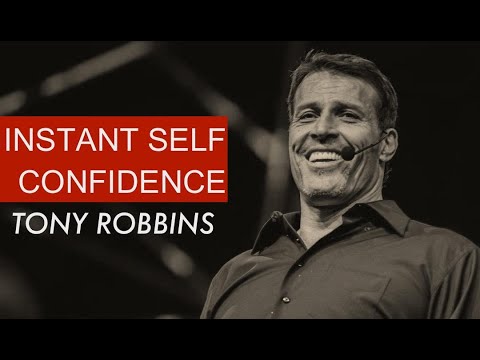
TONY ROBBINS | INSTANT SELF CONFIDENCE
Listen to this m otivational speech on instant self confidence with Tony Robbins! Highly recommend it!
-
.jpg) Life is a rollercoaster of experiences, a whirlwind of ups and downs. It's a journey that often demands emotional strength and resilienc...
Life is a rollercoaster of experiences, a whirlwind of ups and downs. It's a journey that often demands emotional strength and resilienc... -
 By Emmanuel SEGUI People who have self-confidence believe in themselves and feel that they are capable of achieving what they want in life, ...
 -
In this episode, Brendon emphasises that resilience goes beyond coping with personal failure; it's about handling criticism and rejectin...
